


Industry
The DIY Days of Fintech Are Over
I recently had one of those shower epiphanies – you know, when the distractions fade and an idea finally becomes crystal clear. Mine was about the evolution of fintech and how it mirrors the transformation of the auto industry over a century ago. This simple realization explains why solutions like Quiltt exist and why we're on the cusp of something monumental in the industry.
Building Your Own Fintech "Car"
In the early days of fintech, even getting basic solutions off the ground required a ridiculous amount of expertise and engineering work. Companies had to piece individual components together like they were building their own cars from scratch.
Let's break it down:
- Secure Bank Connections (The engine): Need to pull in a user's financial data? Time to partner with a data aggregator like Plaid, MX, Fincity or Yodlee. This is the engine that powers your financial "vehicle." As fragmentation in data sources grows unabated, deploying multiple aggregators is becoming table-stakes for achieving full institution coverage and delivering a delightful user experience.
- Making Data Usable (The transmission): Financial data is often not immediately usable out of the box. AI-powered companies like Ntropy, Pave, and FinGoal provide data transformation services. They're like the transmission, taking the engine's power and turning it into something that can drive actionable insights.
- Initiating Transactions (The steering): Now you actually want to do something with that data – payments, account transfers, etc. This is where transactional specialists like Orum, Dwolla, Sila, Zum Rails and Straddle come in. They provide the steering mechanism that lets you control and maneuver the flow of money.
Imagine trying to build a car by sourcing, assembling, and troubleshooting a high-performance engine, a complex transmission, and a precision steering system – all from different manufacturers! That was until recently, the reality of building in fintech. The fact that great companies have been built in this era is a testament to human ingenuity (and ample VC money!), but it’s undeniable that who could participate and how quickly they could innovate has been seriously limited by all the required complexity.
Quiltt: We Are the Fintech Assembly Line
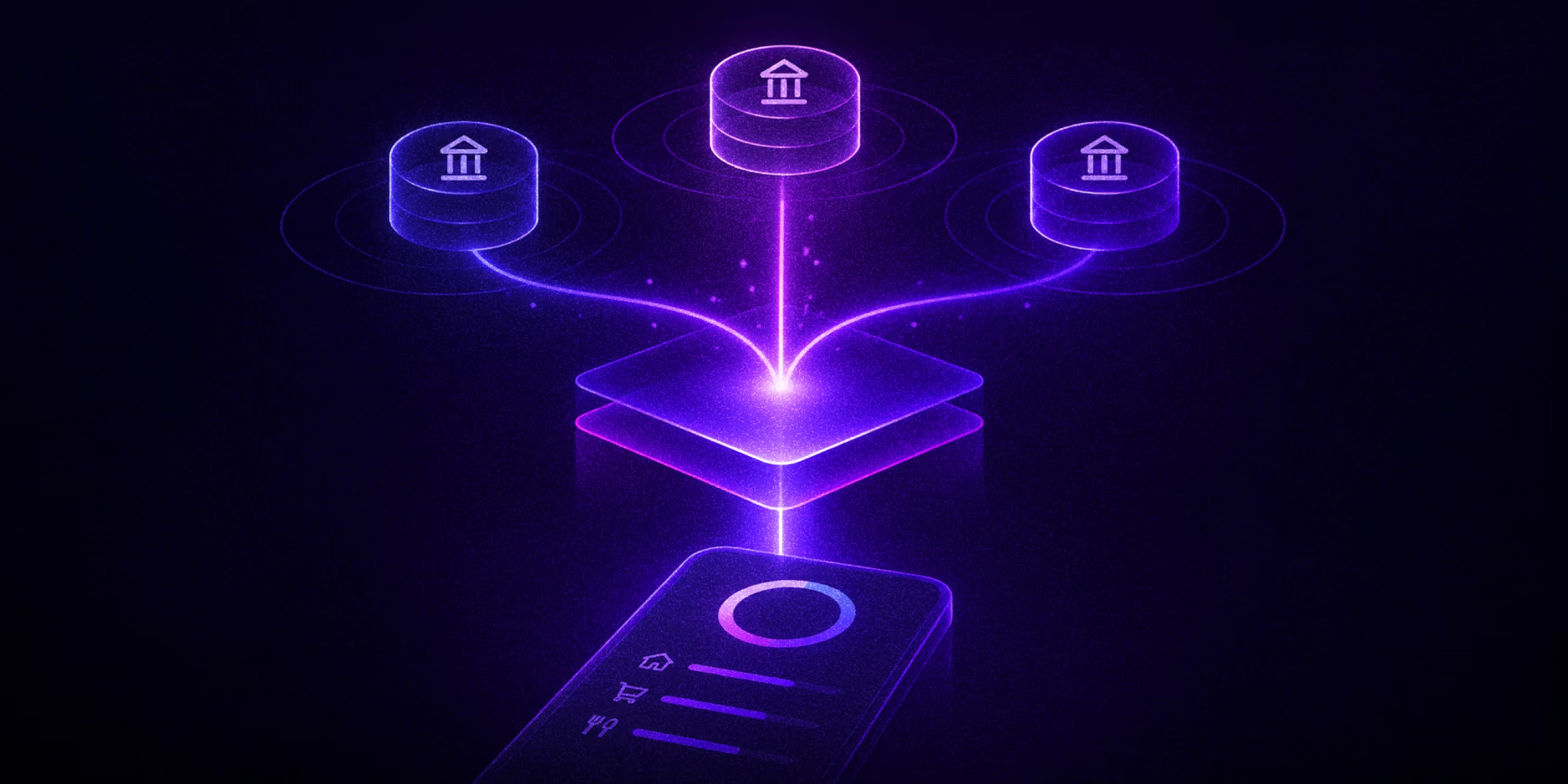
It's time for the industry’s Henry Ford moment. Instead of designing, sourcing and constructing countless individual components, imagine a world where solutions come pre-packaged with all the needed components, ready to assemble together. That's what we do at Quiltt. Here's how it revolutionizes things:
- Accelerated Innovation: Get new financial features to market faster by cutting out the infrastructure hassle. Focus on what makes your business unique and what your team does best.
- Democratization: Companies no longer need giant in-house engineering teams and loads of VC funding to offer robust tools like streamlined payments or personalized financial insights.
- Customization Without Chaos: We provide a robust foundation and curate the best fintech components out there – but let you customize it to your heart’s desire.
Case in Point: A number of our clients have come to us having spent weeks or months integrating an aggregator, only to find - once they are in production - that mission-critical institutions or data products aren’t available. Now they need to rip-and-replace the provider or spin up multiple providers, which requires building an in-house data standardization layer, or additional integrations to an enrichment API - not an easy feat even for the most seasoned fintech engineers. All of these headaches, delays, and costs can be avoided with infrastructure designed like an assembly line.
Driving Fintech Forward
By moving away from the DIY model, we're not just saving companies time and money – we're changing the whole industry.
- Leveling the Playing Field: In the past, building sophisticated fintech products required massive engineering investments. This created a barrier to entry that favored large, well-funded institutions and companies. By providing curated, integrated solutions, we are actively expanding the market and are empowering smaller players and startups to enter with competitive offerings. This increased competition injects vital innovation, driving the industry forward at a faster pace.
- Embedding Finance Everywhere: The notion of "embedded finance" – integrating financial services directly into non-financial platforms– holds immense potential. Imagine ordering a rideshare and getting offered micro-insurance with a tap, or a small business easily providing point-of-sale financing right from their own eCommerce site. This assembly line approach lowers the technical barrier, enabling businesses of all kinds to become fintech providers themselves. It makes financial services more accessible and seamlessly integrated into our daily lives.
- Better for Consumers: Ultimately, these shifts translate into real benefits for consumers. Competition breeds better products, services, and experiences. This wave of integrated, customizable fintech solutions opens the door to:
- Highly personalized financial tools tailored to individual needs and goals.
- Smoother financial processes with less friction across different platforms.
- Greater financial inclusion, reaching a previously underserved population
Challenges and Opportunities
This assembly line future for fintech offers incredible potential, but it's not without roadblocks we need to navigate carefully.
One key issue is data standardization. For integrated solutions to communicate flawlessly, the industry needs better standardization around how we categorize, format, and exchange financial data. Imagine if different car parts weren’t compatible – nothing would work! Pushing for robust, uniform standards will fuel success at scale.
With greater connectivity comes greater responsibility. Security now requires an even wider lens. Zero-trust architectures, encryption at every step, sophisticated authentication, and vigilant threat monitoring aren't just nice-to-haves – they're foundational to the health of the entire interconnected system.
The companies thriving in this new era will be those who abandon siloed thinking and prioritize collaboration. Open API strategies, a commitment to interoperability, and finding strong partners who share your vision are crucial. Picture a car assembly line where each part manufacturer refuses to cooperate with the others... a recipe for disaster!
Finally, it's time for a regulatory refresh. Our regulations often play catch-up with innovation, especially in rapidly evolving sectors like fintech. We need forward-thinking regulators who understand both the promise and potential pitfalls of this interconnected model. They should foster responsible innovation while protecting consumers.
Yet, with these challenges come breathtaking opportunities. A stable, secure, and collaborative fintech ecosystem promises faster evolution of services that tackle unmet needs in creative ways. We'll see new partnerships arise, blurring the lines between established players and innovative startups. And the real-world data gathered by these embedded solutions will supercharge insights into consumer behavior, leading to ultra-personalized experiences and better financial tools for everyone.
By addressing these challenges head-on, the fintech industry clears the path to an incredibly dynamic, consumer-centric future where financial technology is democratized and woven into the fabric of our lives.
The Road Ahead: Shaping a Collaborative Fintech Future
This shift from individual components to integrated solutions isn't simply a change in technology – it's a fundamental shift in philosophy. It represents a future where fintech is more accessible, innovative, and ultimately transforms our relationship with our finances.
The early innovators laid the groundwork. They built the engines, transmissions, and steering mechanisms that powered early fintech products. Now, as we stand on the cusp of this assembly line era, it's time to embrace collaboration over competition, build for long-term consumer outcomes, and advocate for thoughtful regulation that keeps pace with our progress.
The responsibility doesn't lie solely with fintech providers. I invite everyone involved in finance, technology, and consumer services to participate in shaping this future. What excites you about this wave of solutions? What concerns need addressing? By engaging in these conversations, we can collectively accelerate the positive impact of fintech and ensure it leaves no one behind.
Let's build the future of finance together – one that's smarter, fairer, and works for everyone.
Frequently Asked Questions
Why wouldn't I just build direct integrations with each financial institution?
Building one-off integrations with banks or financial institutions is technically complex and resource-intensive. APIs vary significantly in terms of reliability, formatting, and security standards. Aggregators help solve that by offering normalized, consistent data through a single API.
If you want access to multiple providers for broader coverage or redundancy, you'll typically need to negotiate individual contracts with each one. That adds legal, procurement, and compliance complexity to your development process.
Quiltt solves both layers of friction. You get a single integration and a single contract that unlocks access to multiple financial aggregators, so your team can move faster without getting buried in technical or legal hurdles.
Can a company just build its own screen scraper for bank connectivity?
Technically, yes, and AI tooling makes it easier than ever to do so. But this path is problematic:
- It puts customer credentials at risk
- It puts the company in potential conflict with bank terms of service
- It creates brittle infrastructure that breaks with any front-end change
- It undermines the open banking ecosystem that was specifically designed to prevent credential sharing.
For regulated fintech companies, the compliance and reliability costs of self-built scraping almost always outweigh the perceived short-term benefits.
What advantages does Quiltt offer over direct provider integration?
Quiltt significantly reduces the complexity and resource investment required to leverage open banking data:
- Single Integration: Instead of building and maintaining multiple provider integrations, you integrate once with Quiltt.
- Unified API: Access data from any provider through one consistent API, eliminating the need to handle provider-specific data formats.
- Provider Optimization: We automatically route users to the best provider for their specific bank, improving connection success rates.
- Cost Efficiency: Benefit from our aggregated buying power and avoid minimum monthly commitments with individual providers.
- Faster Time to Market: Launch in weeks instead of months with our pre-built components and comprehensive SDKs.
- Simplified Operations: One contract, one integration, one support team, and one bill - dramatically reducing the overhead of managing multiple vendor relationships.

.avif)